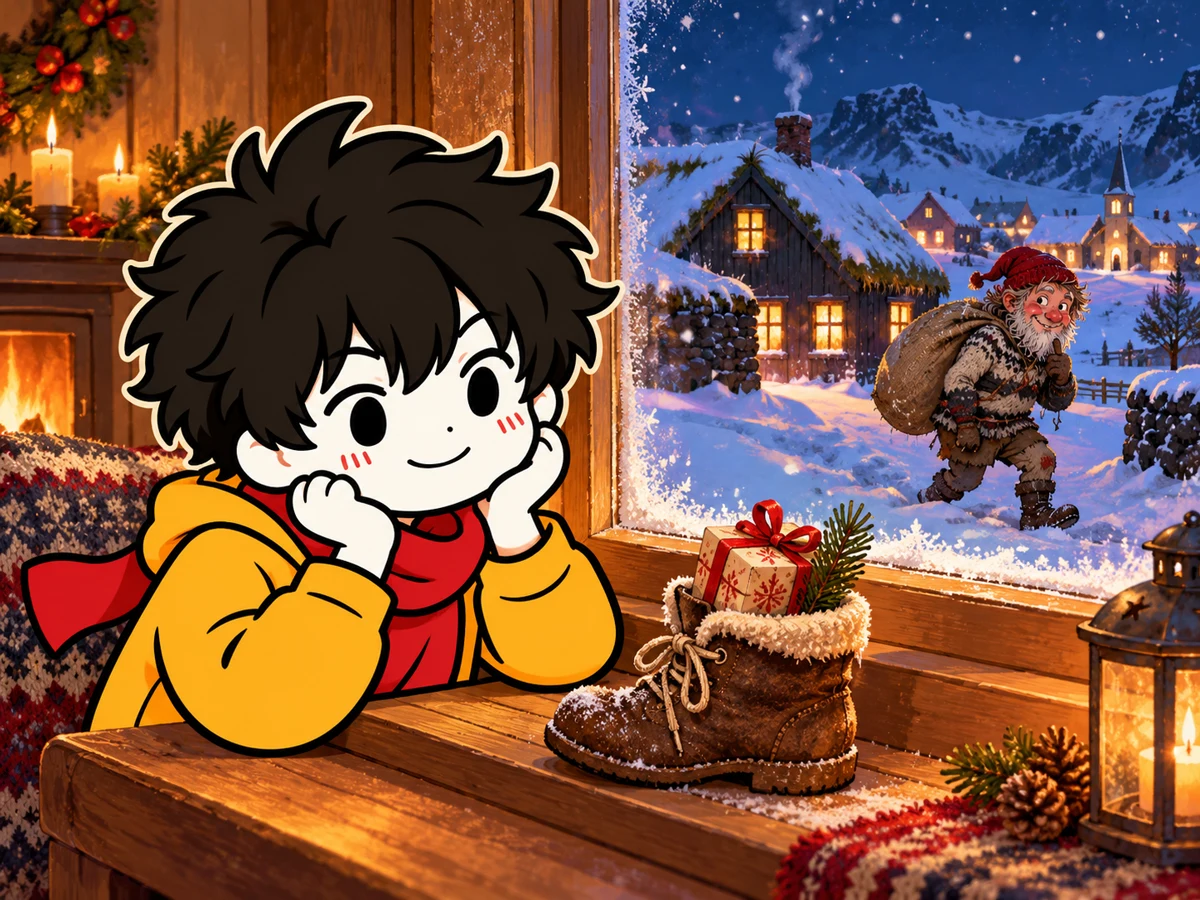
HOP: “Christmas is the same everywhere, right? Tree, presents, snow.”
YUKI: “Not even close. Let’s go see.”
Christmas looks very different depending on where you wake up. In some places it’s snowy and dark by 4 p.m. In others it’s a sunny beach day. Some families celebrate on 25 December, some on 7 January, and some of the biggest moments happen on New Year’s Eve or on 6 January instead. Hop along with HOP to 8 countries and find out what makes each one special.
Quick facts
- Some families in Japan eat fried chicken for Christmas dinner.
- In Spain, people eat 12 grapes at midnight on New Year’s Eve, one for each chime of the clock.
- Mexico celebrates 9 nights of Las Posadas, from 16 to 24 December.
- The Philippines starts playing Christmas songs as early as September.
- Iceland has 13 Yule Lads instead of one Santa.
- In Italy, a kind old woman called La Befana brings sweets on 6 January.
- Ethiopia celebrates Christmas (Genna) on 7 January.
- In Australia, Christmas falls in summer, so many families go to the beach.

Christmas Around the World quiz
8 questions, one per country, plus an answer key. 2 pages, low ink, free for home and classroom use.
1. Japan: fried chicken for Christmas dinner
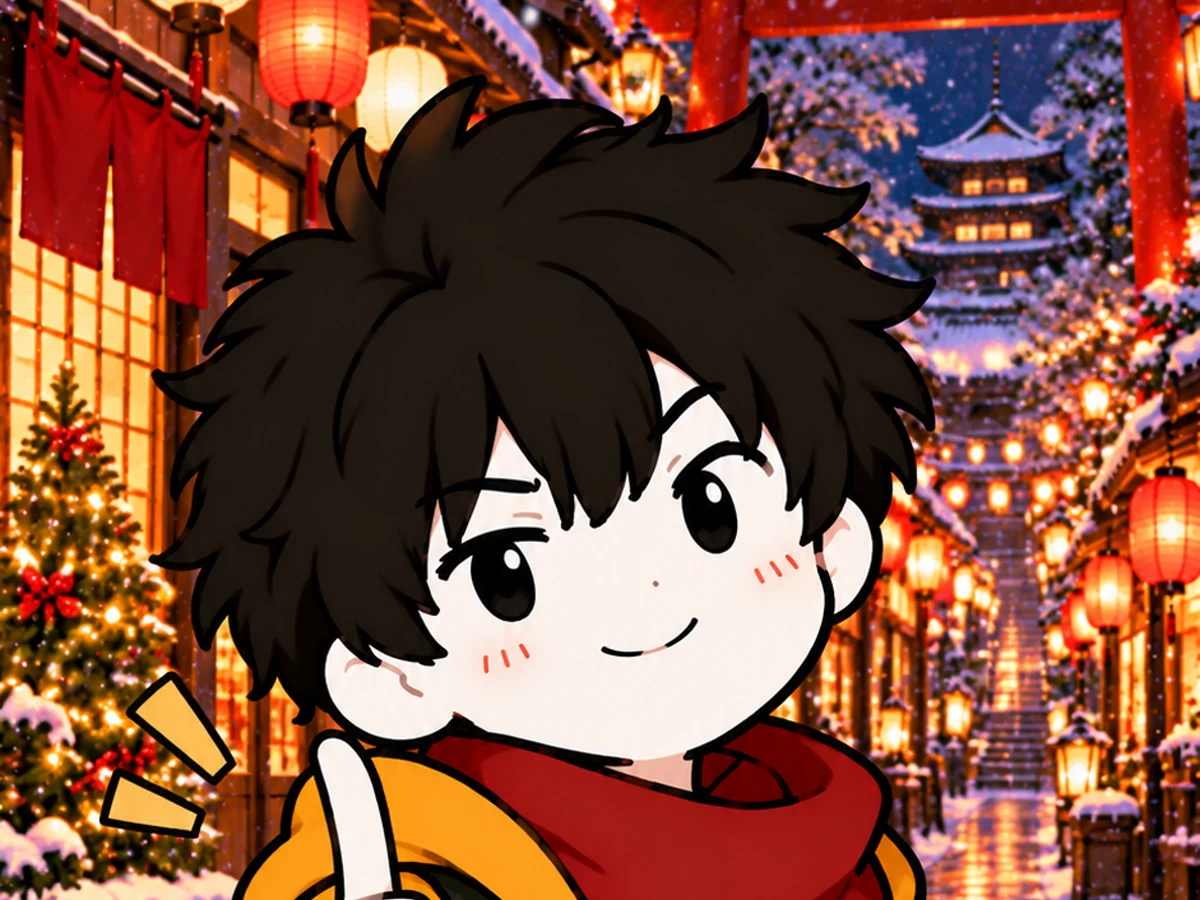
Only about 1% of people in Japan are Christian, so Christmas isn’t a big religious holiday there. It’s more of a fun, cozy day with lights, gifts and a special dinner. And for many families that dinner is a bucket of fried chicken.
It goes back to 1974, when a fast-food chain ran an advert called “Kentucky for Christmas.” The idea stuck. Today some families order their chicken weeks ahead, and lines on Christmas Eve can be long. Dessert is often a Christmas cake: a fluffy sponge with whipped cream and strawberries.
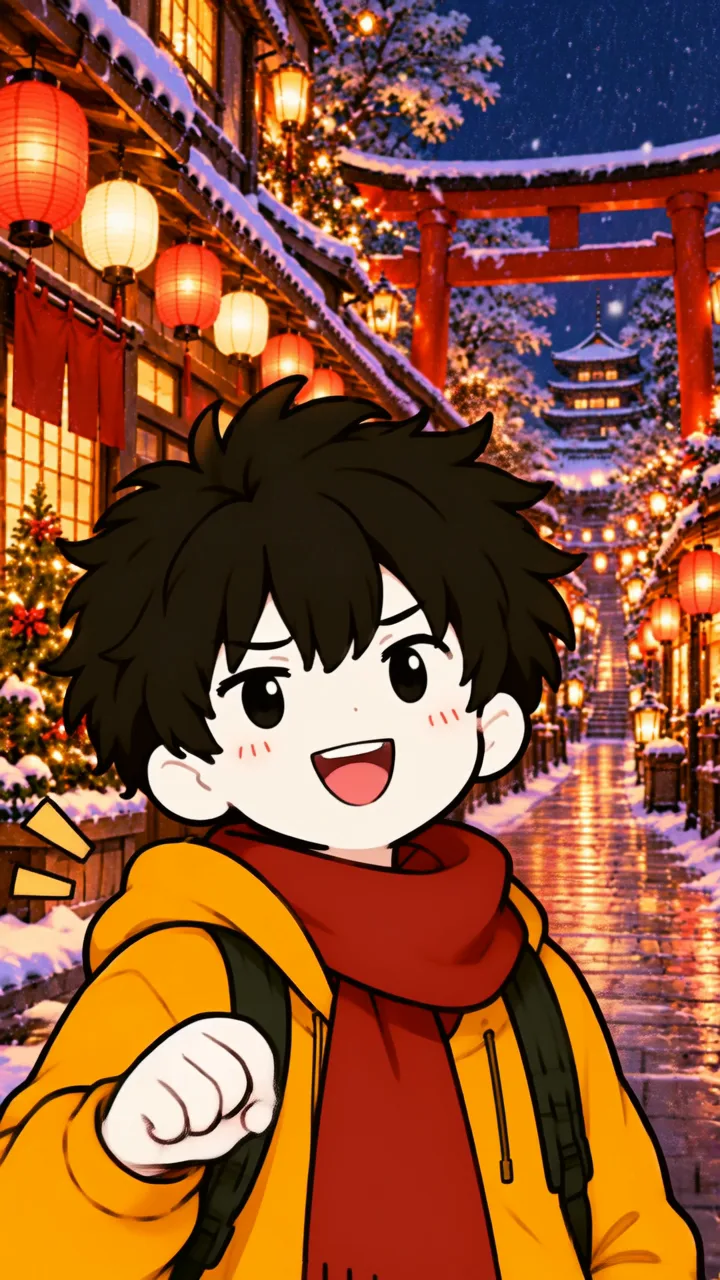 ● JAPAN0:38▶
with chicken?
Why Japan eats chicken at Christmas
Want the whole story? Read Christmas in Japan for Kids or watch HOP and YUKI’s 38-second Short.
Make a “Christmas cake” with plain biscuits, whipped cream and strawberries. Ask: what’s one food that feels like a holiday in your home?
2. Spain: 12 grapes at midnight
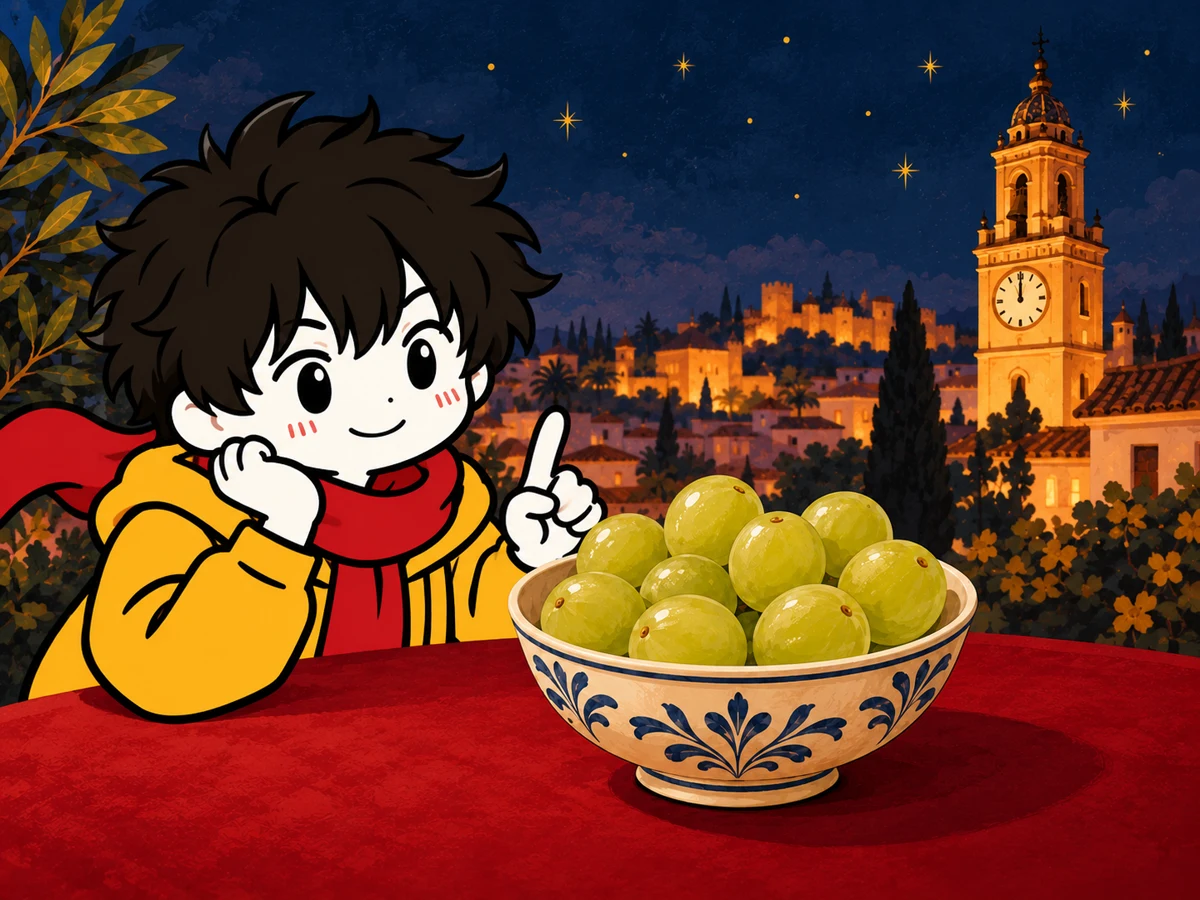
Spain’s festive season lasts from Christmas all the way to 6 January, and one of its most famous moments happens on New Year’s Eve. At midnight the clock strikes 12 times, and people try to eat one grape for every chime. Each grape stands for good luck in one month of the new year. (More midnight customs are in our New Year around the world guide.)
Families across the country watch the clock in Madrid’s Puerta del Sol on TV and race the chimes together. It’s harder than it sounds, and there’s usually a lot of laughing.
Practise with 12 small, seedless grapes cut in halves (whole grapes are a choking risk for little ones). Name one wish for each month.
3. Mexico: Las Posadas, 9 nights of visits
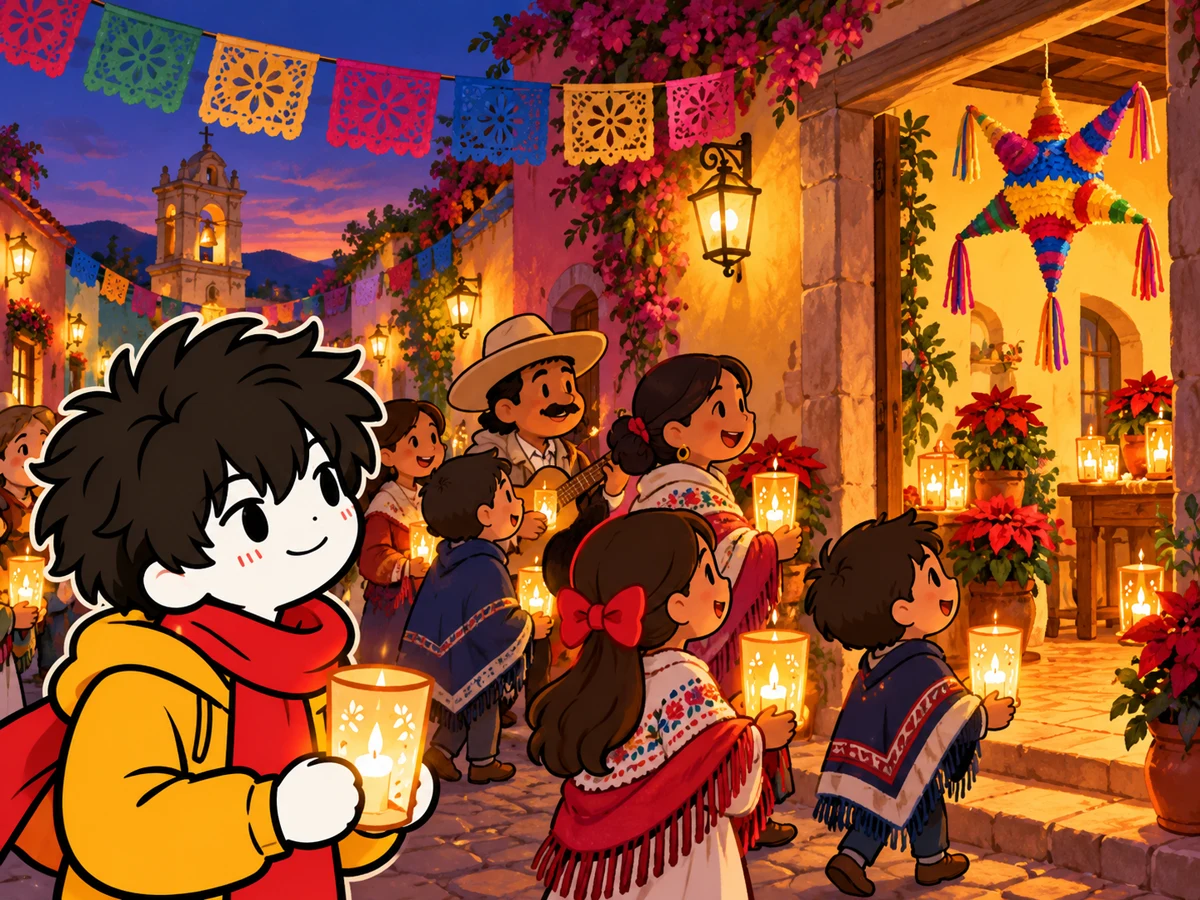
From 16 to 24 December, many neighbourhoods in Mexico celebrate Las Posadas. “Posada” means inn or shelter. Each night a group walks from house to house with candles, singing a song that retells Mary and Joseph’s search for a place to stay.
At the last house, the door opens and everyone is invited in for a party. There is warm fruit punch, tamales, and a piñata, often shaped like a star with 7 points.
Make a paper star piñata from a paper bag and coloured paper strips. Fill it with paper “wishes” instead of sweets.
4. Philippines: the longest Christmas in the world
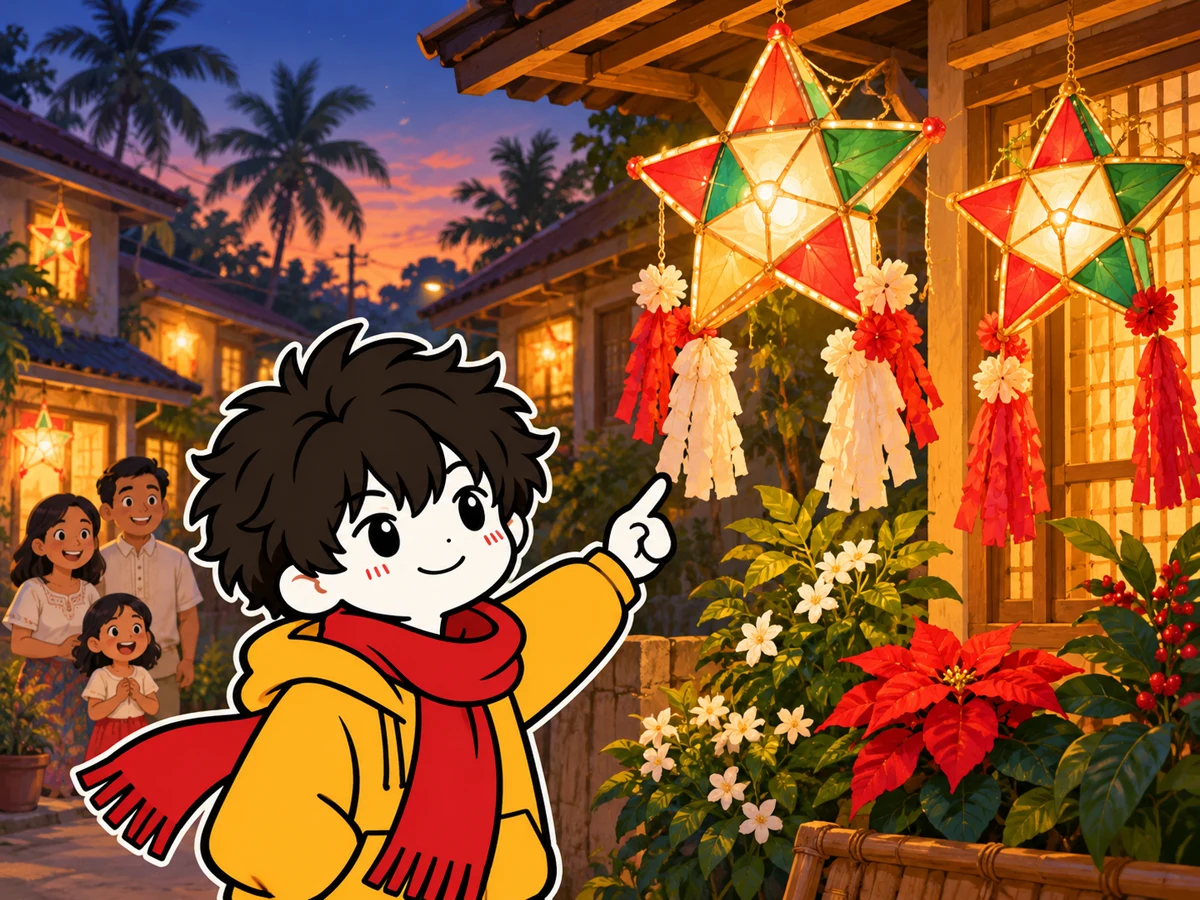
In the Philippines, Christmas songs start playing in September, which is why people call the months ending in “-ber” the Christmas season. That makes it one of the longest Christmas celebrations anywhere.
Homes and streets glow with the parol, a star-shaped lantern traditionally made from bamboo and paper. Many families also go to early-morning church services called Simbang Gabi on the 9 days before Christmas, then share a big midnight feast called Noche Buena on Christmas Eve.
Build a mini parol: glue 5 lolly sticks into a star, cover it with tissue paper and add paper tails.
5. Iceland: 13 Yule Lads and a shoe on the windowsill

Iceland doesn’t have one Santa. It has 13 Yule Lads, cheeky troll-like brothers who come down from the mountains one at a time, one each night, in the 13 nights before Christmas.
Children leave a shoe on the windowsill. If they’ve been good, a Yule Lad leaves a small gift. If not, they might find a potato! Each Yule Lad has a funny name, like Spoon-Licker or Door-Slammer, that tells you what kind of mischief he gets up to.
Icelanders also love the “Christmas book flood”: many people give books on Christmas Eve and spend the evening reading.
Invent your own Yule Lad. What’s his name, and what mischief does he do?
6. Italy: La Befana flies on 6 January
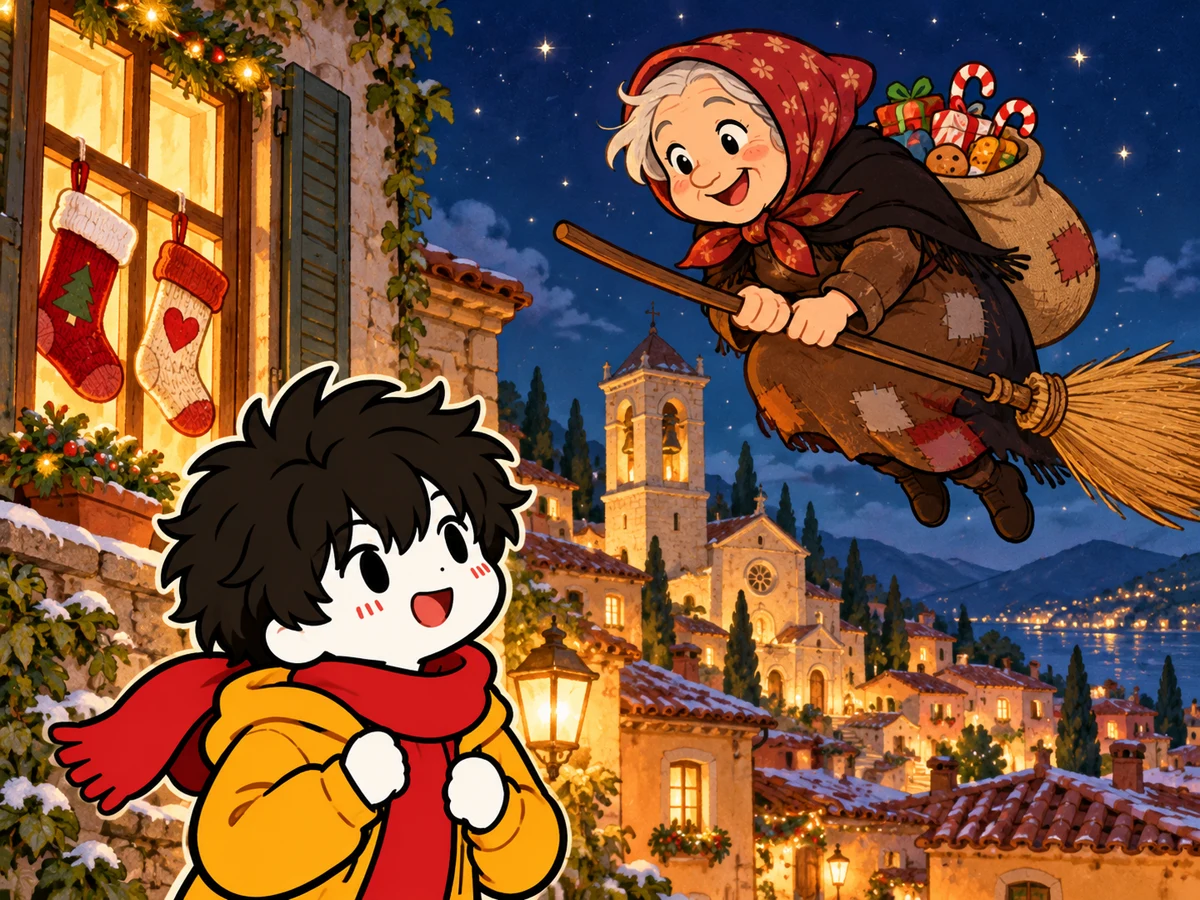
In Italy, Christmas presents can come twice. On the night of 5 January, before the holiday of Epiphany, children wait for La Befana, a kind old woman who flies on a broomstick.
She fills stockings with sweets and small gifts. Children who were naughty might get a lump of “coal,” which is usually a black sugar sweet. Some families say she even sweeps the floor before she leaves.
Hang up a sock and write a note to La Befana about one kind thing you did this year.
7. Ethiopia: Genna on 7 January
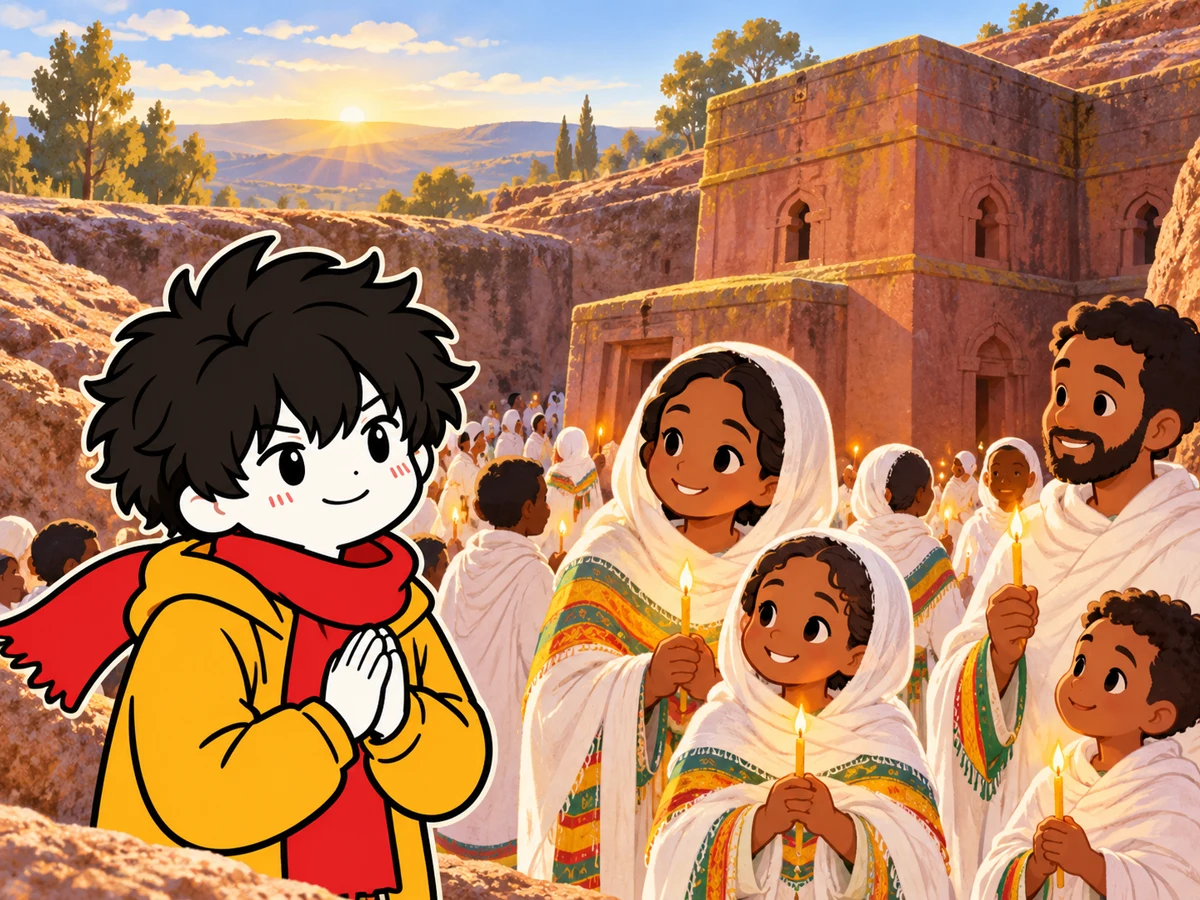
Ethiopian Orthodox Christians celebrate Christmas, called Genna (also spelled Ganna), on 7 January. That’s because the Ethiopian Orthodox Church follows an older calendar.
Many people fast for weeks before. On Christmas Eve, families dress in white cotton shawls called netela and go to church services that can last through the night, often holding candles. Some travel to the famous rock-cut churches of Lalibela. Afterwards, families share a big meal, often with a spicy chicken stew called doro wat.
Look at a calendar and count the days from 25 December to 7 January. Why might different countries celebrate on different dates?
8. Australia: Christmas in summer
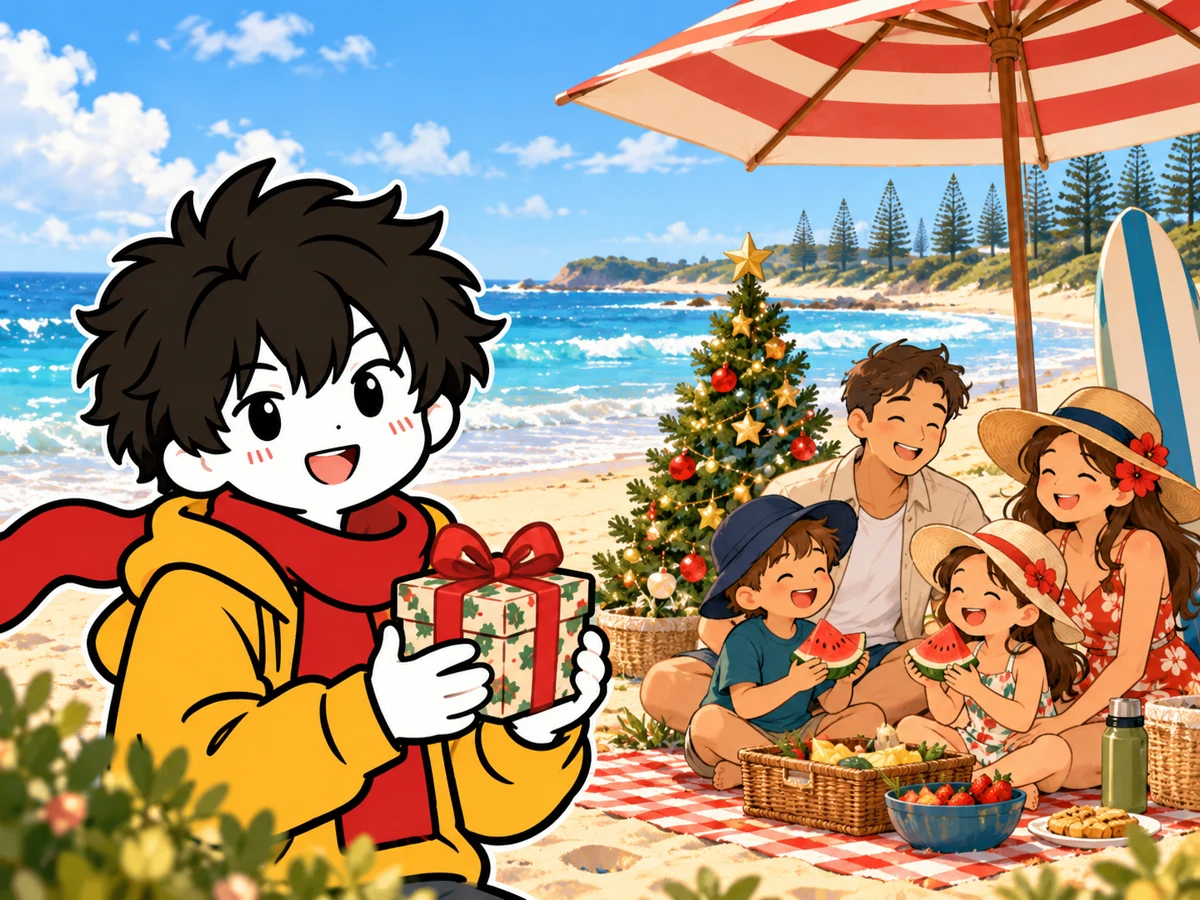
Australia is in the southern half of the world, so December is summer. Christmas there can mean sunscreen, school holidays and a hot sunny day.
Many families head to the beach or a park, have a barbecue, or eat cold food like prawns and salads. In the weeks before, cities hold Carols by Candlelight concerts outdoors in the warm evening air.
Draw Santa dressed for an Australian summer. What would he wear instead of his big red coat?
For parents and teachers: a 20-minute lesson
- 5 min: Watch the Japan Short together and ask “What did you guess before the answer?”
- 10 min: Read 2 or 3 countries aloud. Kids mark each one on a world map.
- 5 min: Do the free quiz in pairs, then check with the answer key.
- Bonus: Ask each child to share one tradition from their own family. There’s no wrong answer.
Traditions vary a lot from family to family, even inside one country. When you talk about them, words like “many families” and “some people” are more accurate than “everyone.”
Get the free quiz
8 questions, one per country, plus an answer key. 2 pages, low ink, free for home and classroom use.
Christmas around the world: questions kids ask
Does every country celebrate Christmas?
No. Christmas is a Christian holiday, and many countries and families celebrate other holidays instead. In some places, like Japan, many people enjoy Christmas as a fun, non-religious day.
Why do some countries celebrate Christmas on 7 January?
Some Orthodox churches, including in Ethiopia, follow a different calendar. On it, Christmas falls on what most of the world calls 7 January.
Where is Christmas celebrated in summer?
In countries in the southern hemisphere, such as Australia, New Zealand, South Africa, Argentina and Brazil, December is summer.
Who brings presents if not Santa?
It depends where you are: the 13 Yule Lads in Iceland, La Befana in Italy, and the Three Kings in Spain and Mexico on 6 January.
Sources
- Spain.info (official tourism): New Year’s Eve in Spain
- Gobierno de México: Diciembre y sus posadas
- Las Piñas City Government: Parol making
- Visit Iceland: Christmas in Iceland
- Italia.it (official tourism): Epiphany and La Befana
- Ethiopian News Agency: Ethiopian Christmas, Genna
- Queensland tourism: Christmas in Queensland
- ScarfHop: Christmas in Japan for Kids (with its own sources)

Shoaib Jan
Creator of ScarfHop. I check every fact in our stories against trusted sources, listed above. More about ScarfHop