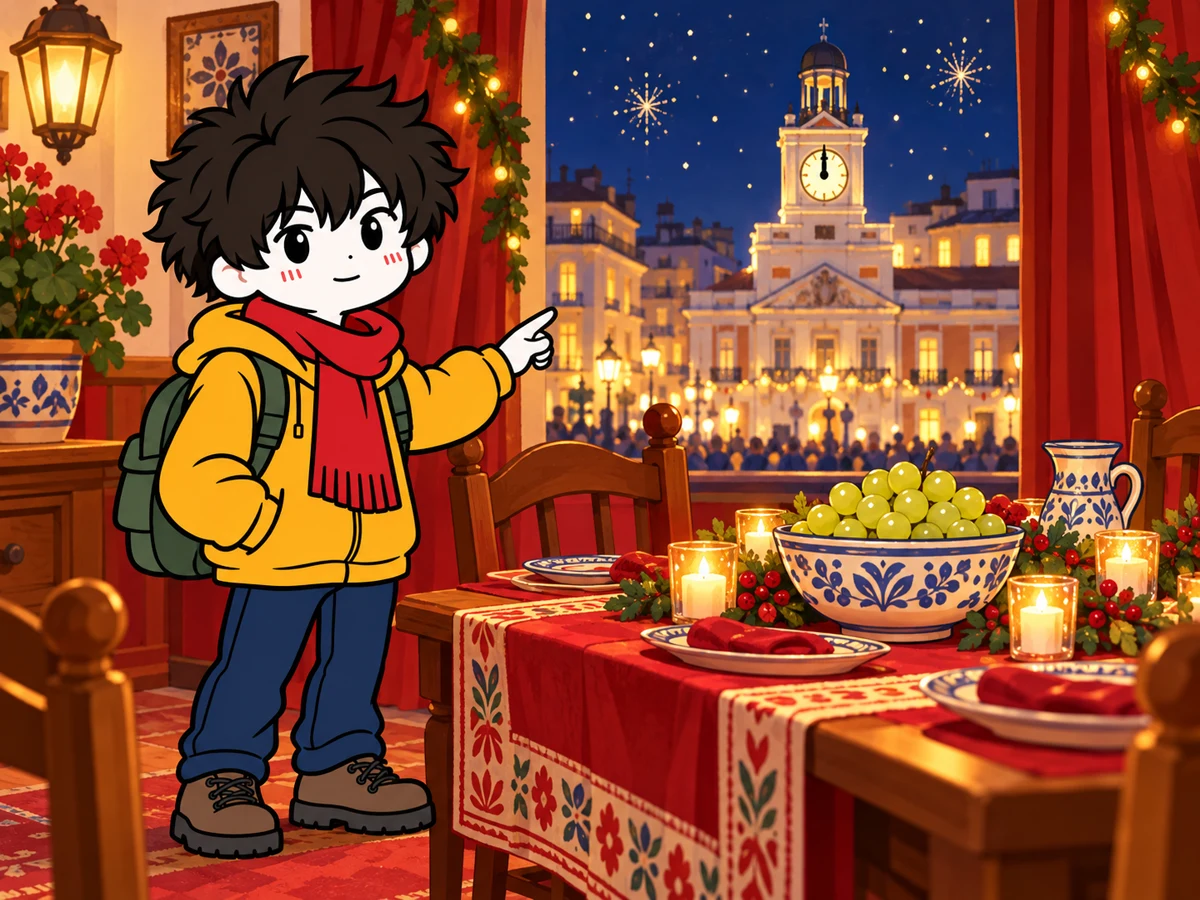
HOP: “New Year is just fireworks and a countdown, right?”
YUKI: “Some people eat grapes. Some jump off chairs. Some ring a bell 108 times. Want to see?”
Almost everyone on Earth says goodbye to the old year in some way, but the how changes from place to place. In one country you race a clock with your mouth full of fruit. In another you wait at the door for a lucky first visitor, or splash through the sea in white clothes. Hop along with HOP to 8 countries and see how kids and families welcome a fresh start.
Quick facts
- In Spain, people eat 12 grapes, one for each chime at midnight.
- In Japan, Buddhist temples ring a big bell 108 times.
- In Denmark, some people jump off a chair at midnight for good luck.
- Not everyone’s New Year is on 1 January. Many families also celebrate Lunar New Year, Nowruz or Rosh Hashanah.

New Year Around the World worksheet
Match 8 countries to their traditions, then write or draw your own New Year wish. Answer key included. 2 pages, low ink, free for home and classroom use.
1. Spain: 12 grapes, 12 chimes

Just before midnight on 31 December, families in Spain get a small bowl of 12 grapes ready. When the clock starts to strike 12, they eat one grape for every chime. Finish all twelve in time, and the tradition says you’ll have a lucky, happy year, one good month for every grape.
Thousands of people gather under the famous clock in Madrid’s Puerta del Sol, and the chimes are shown live on TV all over Spain, so families at home race the very same clock. Cheeks full of grapes and lots of laughing are part of the fun. (You might remember the grapes from our Christmas around the world trip too.)
Do a “12 chimes” countdown: clap 12 times slowly and say one wish for each month of the year. Little ones can use a paper plate with 12 drawn grapes instead of real ones.
2. Scotland: Hogmanay and the first visitor
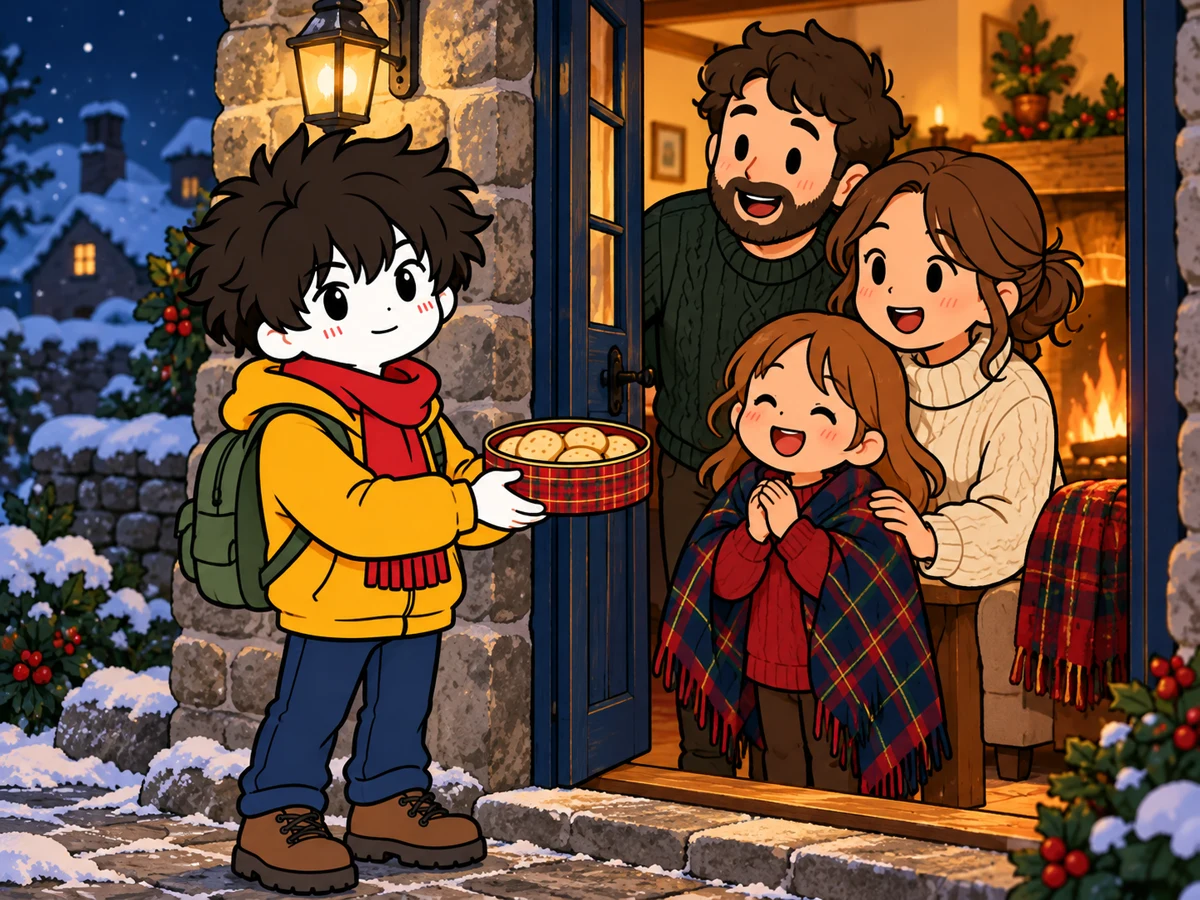
In Scotland, New Year’s Eve has its own name: Hogmanay. One of its oldest customs is first-footing. The first person to step into a home after midnight is the “first foot”, and they are meant to bring luck for the whole year.
Traditionally the first foot brings small gifts, like shortbread, a rich fruit cake called black bun, or a piece of coal so the house stays warm. Arriving empty-handed is thought to be unlucky! At midnight many people also link arms in a circle and sing “Auld Lang Syne”, a song with words by the Scottish poet Robert Burns that is now sung all around the world.
Be someone’s “first foot”: make a small card or a homemade treat and give it to a neighbour, grandparent or classmate on the first day back.
3. Denmark: jumping into the new year
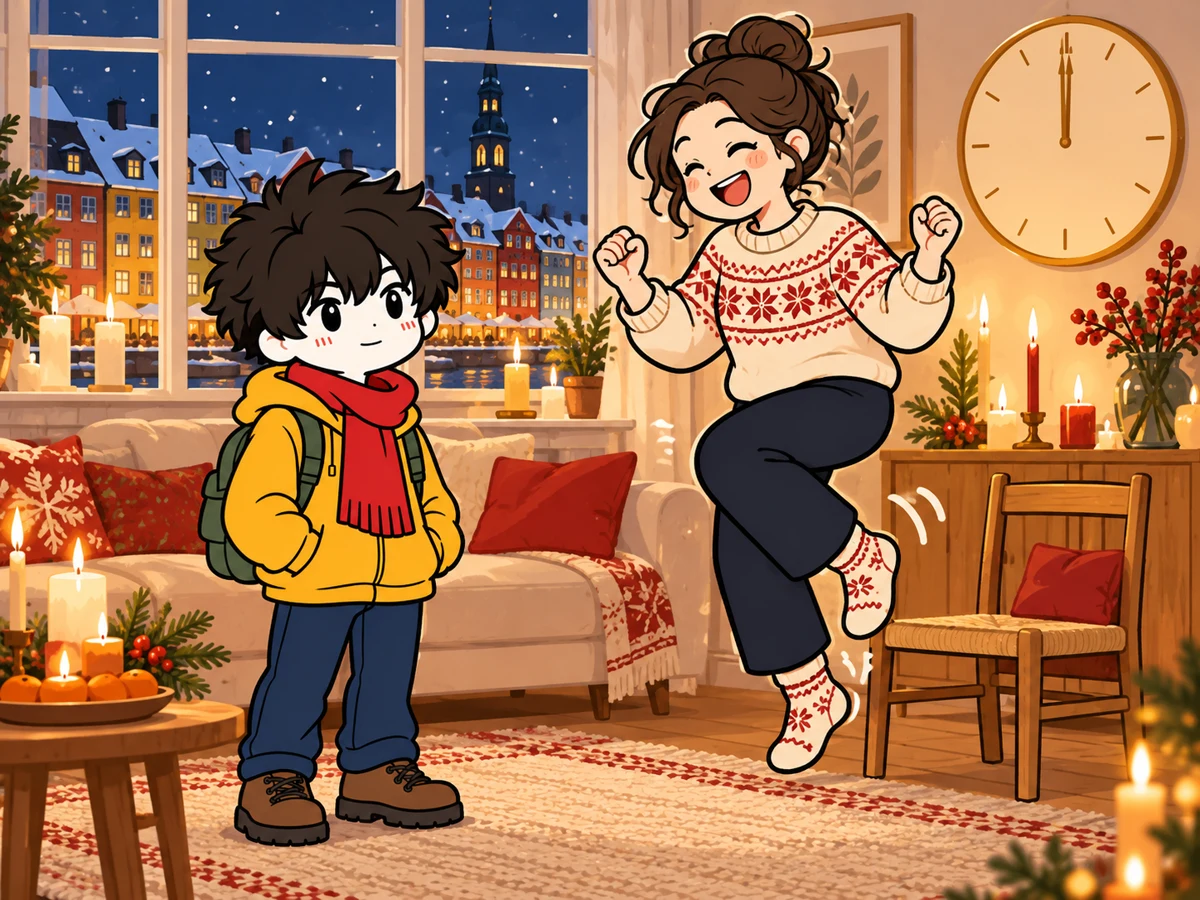
In Denmark the evening often starts at 6 p.m., when families gather around the TV to watch the King’s New Year speech. Later comes a big dinner and, at midnight, a tower-shaped almond cake called kransekage.
Then comes the funniest part. As the clock strikes midnight, many people climb onto a chair or sofa and jump off it together, literally leaping into the new year. It’s meant to bring good luck, and it means you start January in mid-air.
Count down from 10 together and do a “Danish jump” off a low, steady step (not a wobbly chair!) with a grown-up nearby.
4. Brazil: white clothes and seven waves
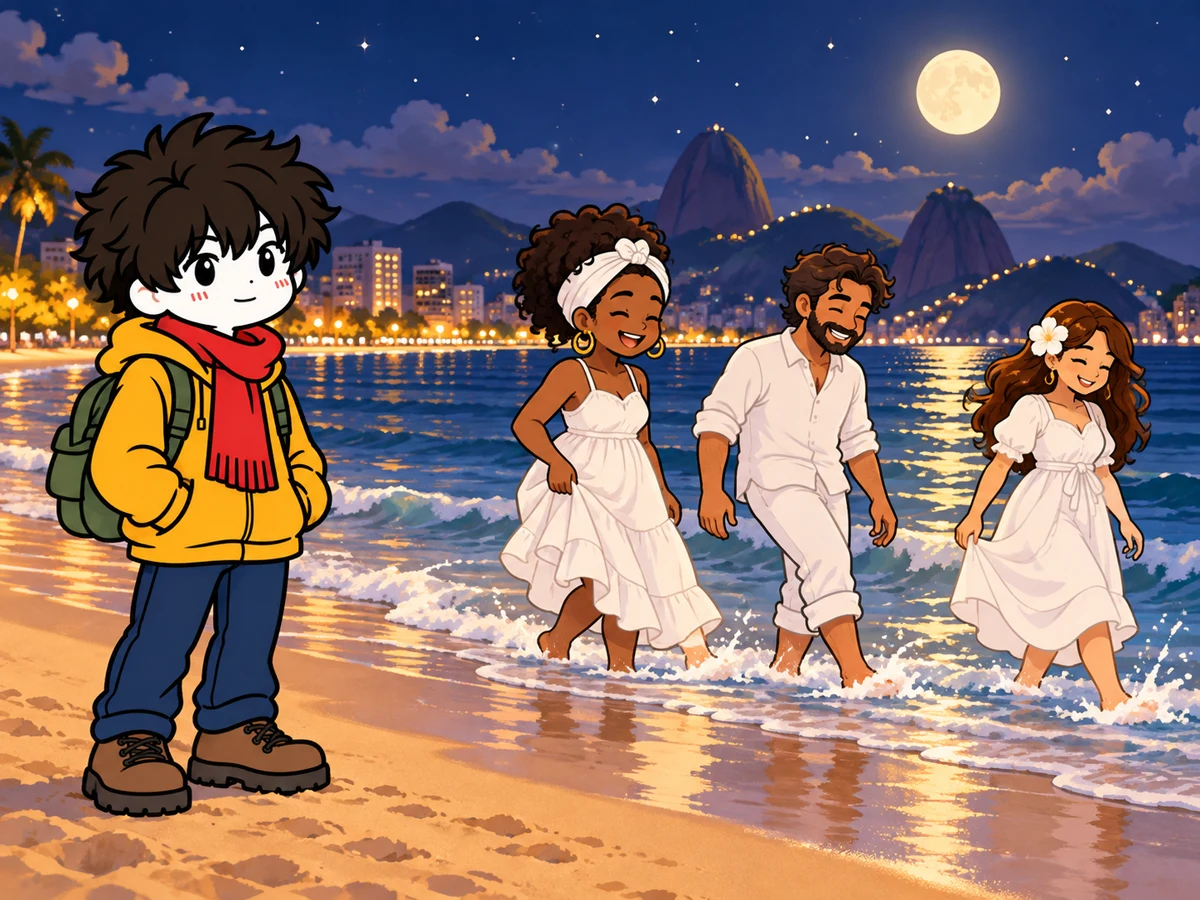
New Year’s Eve in Brazil is called Réveillon, and it’s summer there, so many people celebrate on the beach. One of the biggest parties is on Copacabana beach in Rio de Janeiro. Lots of people dress all in white, a colour that stands for peace and a fresh start.
At midnight, some people walk to the edge of the sea and jump over seven small waves, making one wish for each wave. These customs have roots in Afro-Brazilian religions, where Iemanjá is honoured as the queen of the sea, and some people bring her flowers. Today, Brazilians of many backgrounds join in, and every family does it a little differently.
Draw seven waves across a page and write one wish inside each one. Which wish would you jump over first?
5. Japan: a temple bell rings 108 times
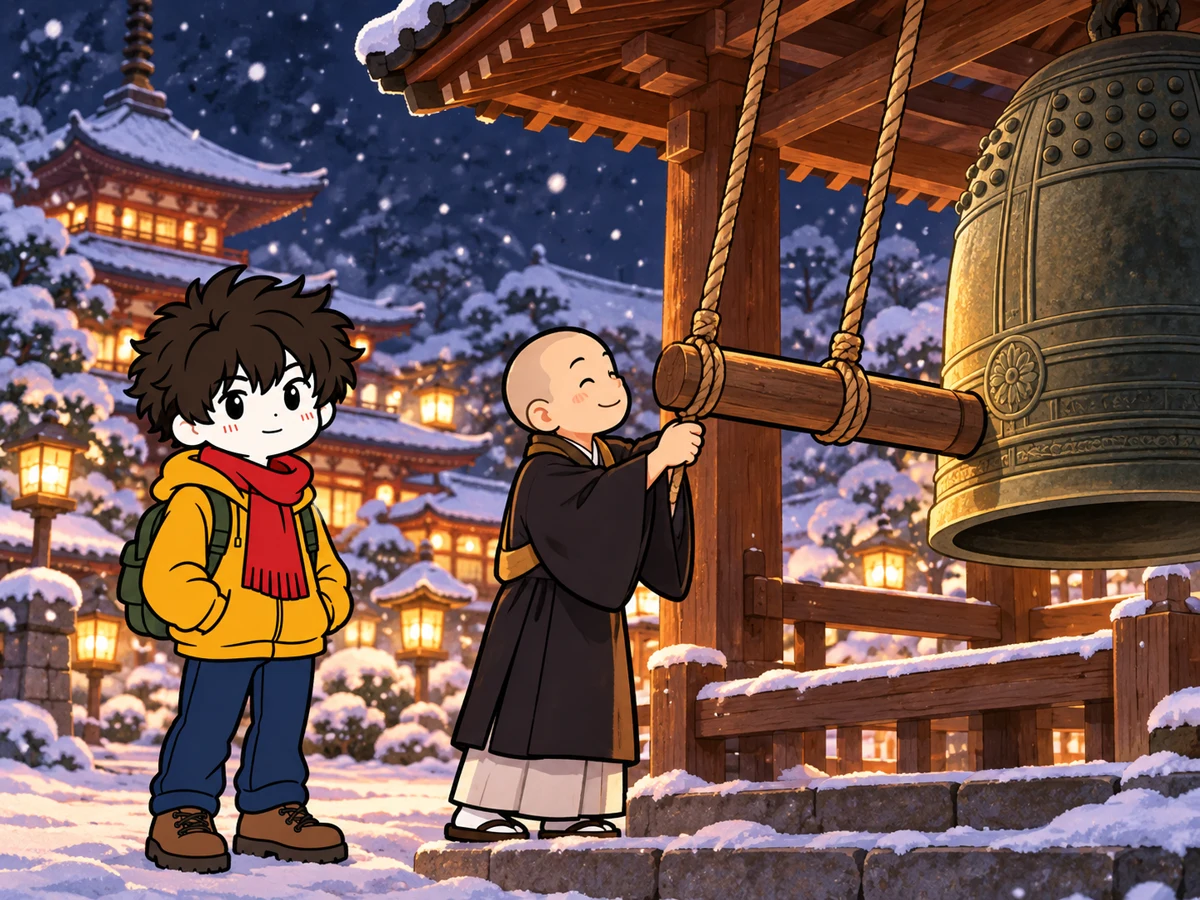
New Year is one of the most important holidays in Japan. On New Year’s Eve, Buddhist temples across the country ring their huge bells 108 times. This ceremony is called Joya no Kane. Each deep “boom” is a way of clearing away 108 worldly desires and worries from the past year, so people can start the new year with a clear, calm mind.
The bell is struck with a big wooden log that swings on ropes. At some temples visitors can line up to take a turn. Many families also eat long buckwheat noodles that evening and visit a shrine or temple in the first days of January. (Want more Japan? See how Christmas in Japan is different too.)
Tap a pot gently with a wooden spoon 10 times. With each “bong”, say one thing from last year you’d like to leave behind.
6. Philippines: round fruits for luck
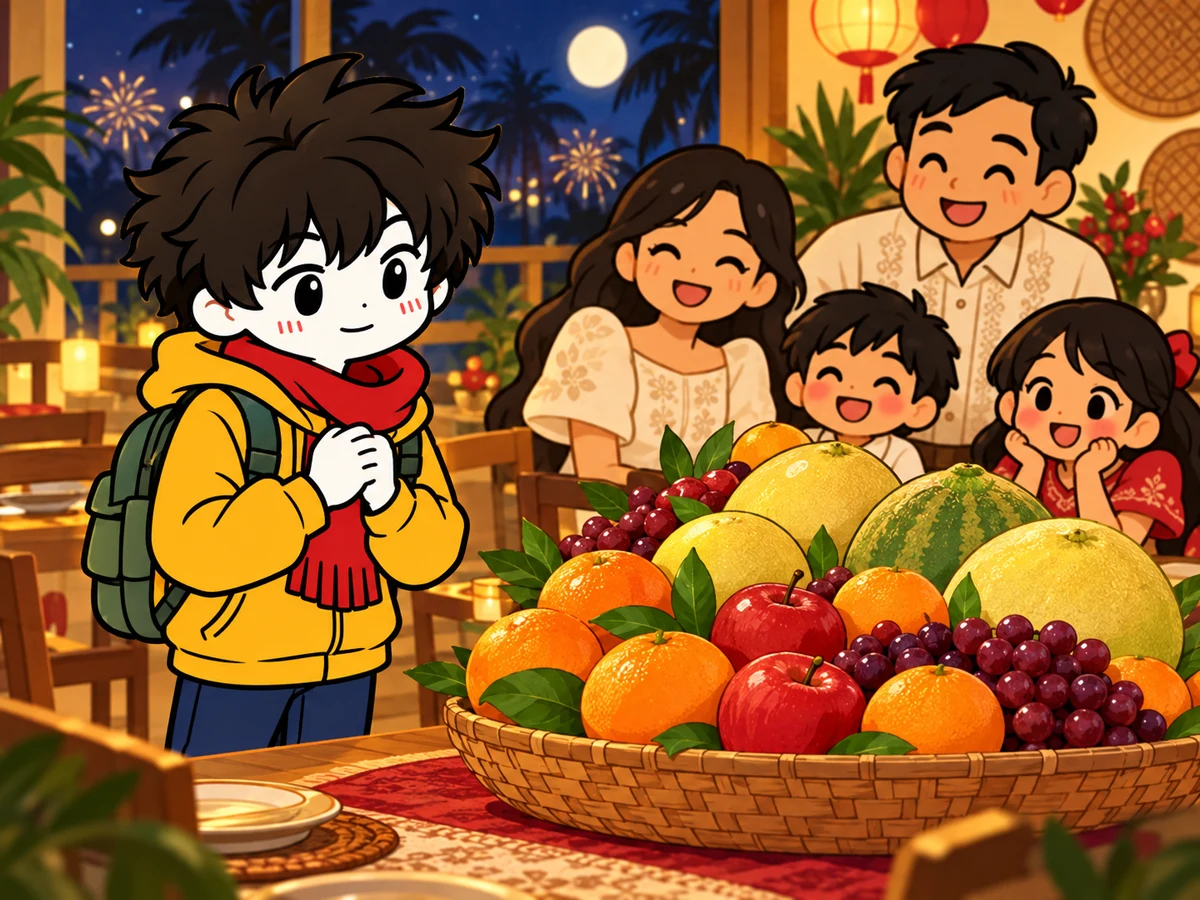
In the Philippines, many families put a bowl of round fruits on the table for the midnight feast, called Media Noche. Round fruits look like coins, so they stand for money and good luck. Lots of families choose 12 different kinds, one for each month, like grapes, oranges, apples, melons and pomelos.
Round shapes show up everywhere that night: some people wear clothes with polka dots, and others keep coins in their pockets. You might even see kids jumping up and down at midnight. Some say it helps you grow taller in the new year!
Go on a “round things” hunt at home or in class. Can you find 12 round things? Draw them all in one big lucky bowl.
7. Ecuador: goodbye to the “old year” doll
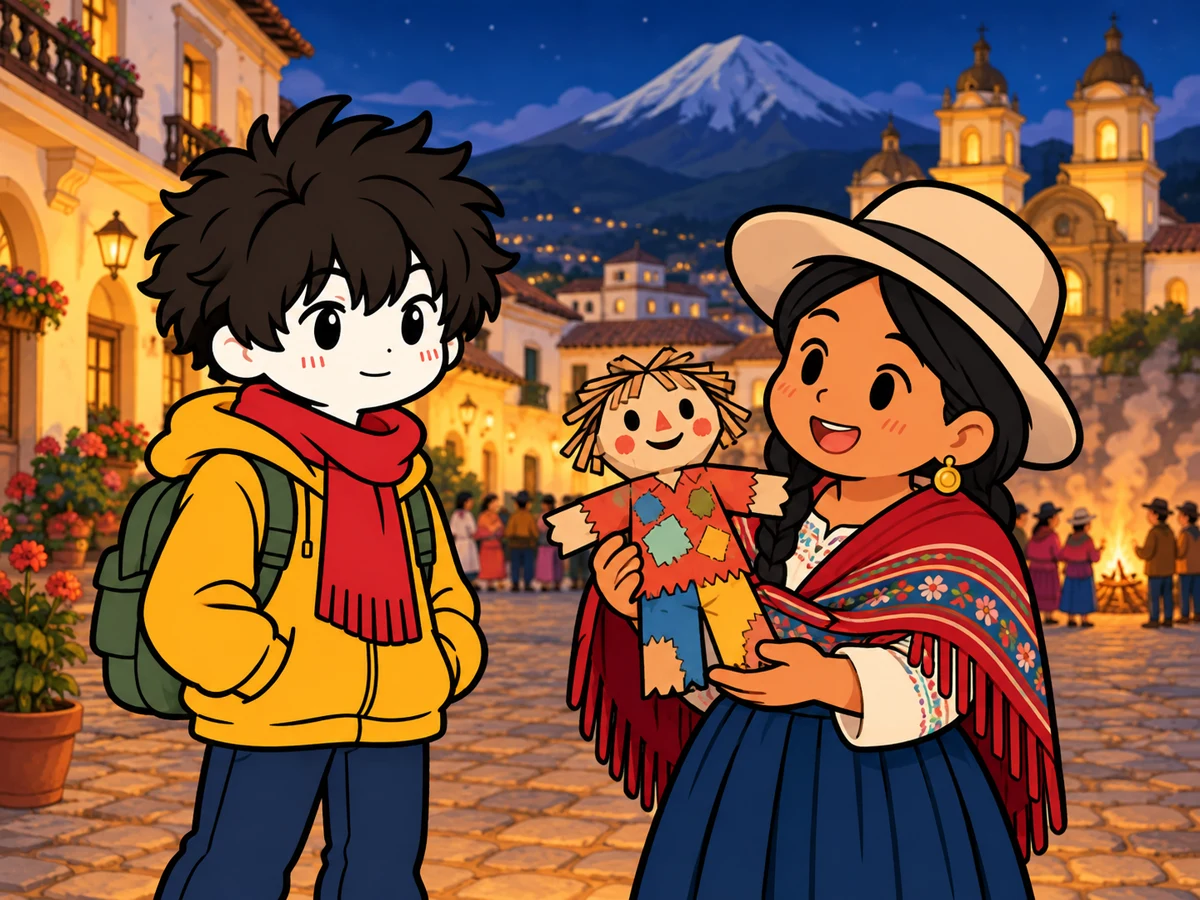
In the days before New Year in Ecuador, streets fill with big, colourful dolls called años viejos, which means “old years”. Families make them from old clothes stuffed with paper or sawdust, and often give them a painted papier-mâché mask of a cartoon character, a sports star or a famous person.
The doll stands for everything from the old year that people want to leave behind. At midnight, grown-ups burn the dolls outside as a goodbye to the old year and a welcome to the new one. It’s one of Ecuador’s best-loved traditions, and making the doll together is a big part of the fun.
Make a small paper “old year” doll. On its back, write one thing you want to leave behind. At the end, scrunch it up and pop it in the recycling bin. No fire needed!
8. South Korea: the first sunrise
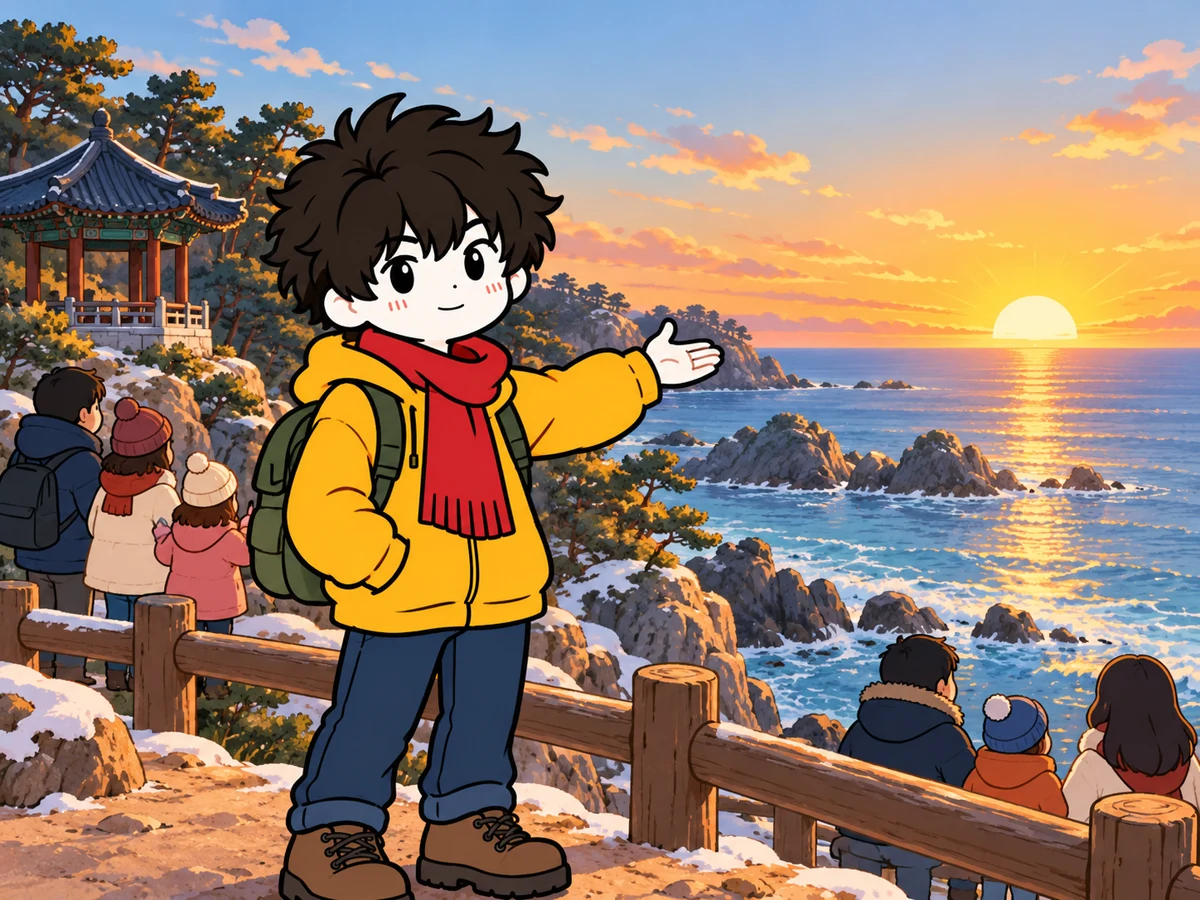
On 1 January, families, friends and couples in South Korea get up very early and head to the sea or up a mountain to watch the first sunrise of the year. As the sun appears, people make a wish for the year ahead. Jeongdongjin, on the east coast, is one of the most famous sunrise spots.
Korea also has a second, even bigger New Year: Seollal, the Lunar New Year, in January or February. That’s when families gather at home, bow to their elders and eat rice-cake soup.
Set an alarm on a weekend morning and watch the sunrise from a window. Draw what you see and write one wish underneath.
For parents and teachers: a 20-minute lesson
- Warm-up (3 min): Ask, “How does your family say goodbye to the old year?” Collect answers on the board.
- Explore (7 min): Show the 8 pictures on this page. Read one or two lines for each country, or let pairs read one country each and report back.
- Match (5 min): Hand out the free worksheet and let children join each country to its tradition.
- Wish (5 min): Everyone writes or draws one New Year wish in the box at the bottom. Check the answers together with page 2.
Tip: Some children in your class may celebrate a different New Year, like Lunar New Year, Nowruz, Rosh Hashanah or Diwali. Invite them to share, because every family’s way counts.
Print the worksheet
Matching game + “My New Year wish” box + answer key. Free for home and classroom use.
Frequently asked questions
Which country celebrates New Year first?
Kiritimati (Christmas Island), part of the Pacific nation of Kiribati, is one of the first places to reach midnight, about 14 hours ahead of London. One of the last places where people live, American Samoa, gets there about 25 hours later.
Does every country celebrate New Year on 1 January?
Most countries mark 1 January, but many people also celebrate other New Years: Lunar New Year in China, Korea and Vietnam, Nowruz in Iran and Central Asia in March, Rosh Hashanah in the Jewish calendar, and Enkutatash in Ethiopia in September.
Why do people in Spain eat 12 grapes?
One grape for each of the 12 chimes of the clock at midnight. Each grape stands for one lucky month in the year ahead.
Is the worksheet really free?
Yes. Print as many copies as you like for your home or classroom. There’s no sign-up. Choose US Letter or A4 above.
Sources
- Spain: Spain’s official tourism site (spain.info)
- Scotland: Forever Edinburgh (official city tourism)
- Denmark: VisitDenmark
- Brazil: Visit Brasil (official tourism)
- Japan: Japan Tourism Agency
- Philippines: GMA News
- Ecuador: Moon Travel Guides
- South Korea: Korea Tourism Organization

Shoaib Jan
Creator of ScarfHop. I check every fact in our stories against trusted sources, listed above. More about ScarfHop